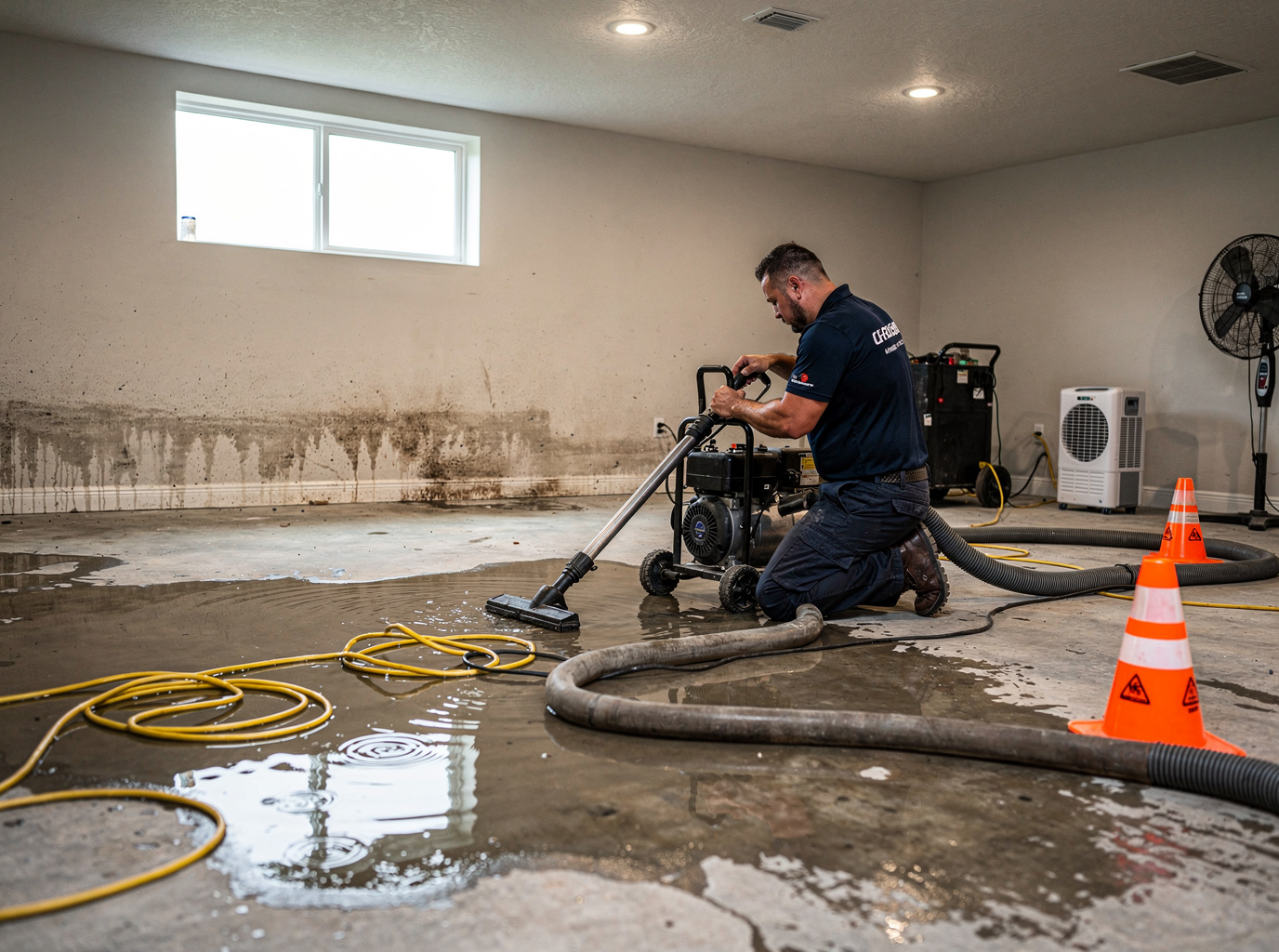
Pensacola's older homes near Historic Pensacola Village often sit on high water tables that push moisture into below-grade spaces during humid subtropical downpours. Properties along I-10 and US-29 corridors near Naval Air Station Pensacola see rapid basement saturation when Gulf surges back up drainage systems. Mild winters keep the ground saturated longer, so extraction crews must address both standing water and lingering dampness in crawlspaces common to Escambia County housing stock.
Basement Water Extraction in Pensacola — What We Handle
- ✓Extraction routes must account for naval base traffic and bridge access to Pensacola Beach during storm events.
- ✓Historic district foundations require gentler pumping methods to protect original masonry unlike newer tract homes.
- ✓White-sand beach proximity means salt-laden floodwater accelerates corrosion on equipment and fixtures.
Port St. Lucie homes built on the flat terrain of St. Lucie County often sit close to the high water table, so even modest rainfall or a failed sump can push water into lower-level rooms or utility spaces that function like basements. Extraction starts with locating the entry point—usually around foundation perimeters near Tradition or St. Lucie West—then removing standing water before it migrates into drywall or electrical boxes. Crews use submersible pumps rated for the silty local soil that clogs standard equipment faster than inland Florida soils.
After the bulk water is pulled, the job shifts to checking for hidden pockets behind finished walls common in 1990s-era Port St. Lucie builds. Moisture meters track saturation in concrete block that holds water longer than wood framing, and extraction continues until readings drop below 15 percent. Skipping this step leaves conditions for mold within 48 hours during the humid summer months that follow Atlantic storms.
How It Works in Pensacola
- 1
Site Assessment
Technician inspects entry points, measures water depth, and identifies any electrical or structural risks specific to the home's foundation in Port St. Lucie.
- 2
Water Extraction
Submersible pumps and wet vacuums remove standing water while separating clean versus contaminated flows based on local soil and municipal conditions.
- 3
Moisture Verification
Meters check walls, floors, and cavities until readings meet drying standards before equipment is removed from the property.
- 4
Final Walkthrough
Owner reviews extracted areas and receives notes on any follow-up steps needed for the specific neighborhood conditions.
Basement Water Extraction Services We Offer in Pensacola
✓Sump Pump Failure Extraction
Rapid removal of groundwater that backs up when a sump pump stops during heavy Port St. Lucie rains, preventing damage to finished lower levels.
✓Storm Flood Basement Extraction
Pumping and debris separation after tropical storms push water into below-grade spaces common in older St. Lucie County neighborhoods.
✓Foundation Crack Water Removal
Targeted extraction along hairline cracks in slab or block foundations that let in water after prolonged wet seasons in Port St. Lucie.
✓Appliance Leak Basement Extraction
Cleanup of water from washing machines or water heaters that leak into utility rooms below living space in local single-story homes.
✓Sewage Contaminated Extraction
Safe removal and disposal of backed-up wastewater that enters basements through overloaded lines after area flooding events.
Serving All of Pensacola
We regularly handle basement water extraction jobs near:
- 📍Pensacola Beach
- 📍Historic Pensacola Village
- 📍Naval Air Station Pensacola
- 📍University of West Florida
Basement Water Extraction Pricing in Pensacola
Upfront quotes after on-site inspection; final cost depends on water volume and access in Port St. Lucie homes.
Want the full picture of this service? See our Basement Water Extraction page, or everything we do in Pensacola, FL.