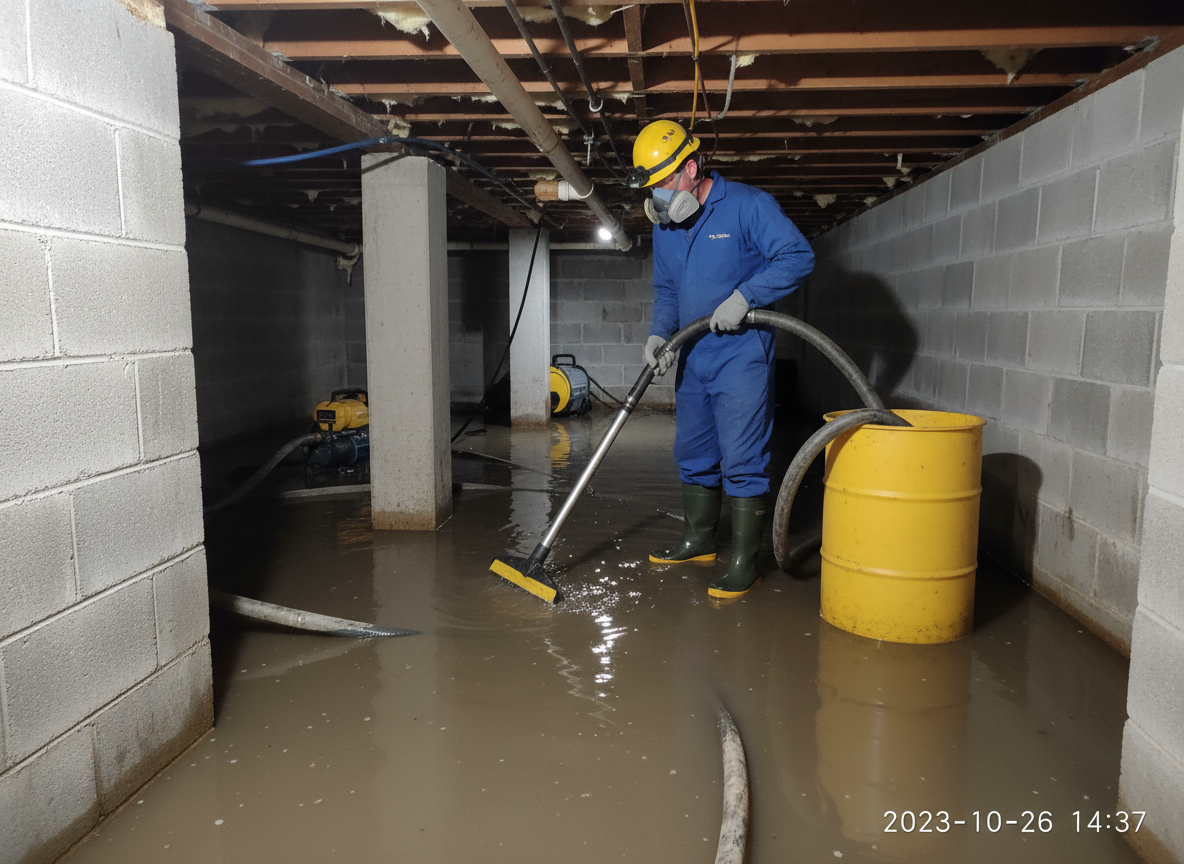
Port St. Lucie homes built on pier-and-beam foundations often see water collect in crawl spaces during the May-to-October rainy season when afternoon thunderstorms dump several inches in hours. Sandy native soil lets water move fast laterally, so extraction must start at the lowest points near the perimeter before it reaches support posts or insulation. Technicians use submersible pumps rated for sandy debris followed by air movers positioned to pull moisture from the soil surface rather than just blowing across it.
Older neighborhoods like River Park and parts of White City have crawl spaces with limited access and low clearance, forcing crews to work in sections and sometimes remove sections of vapor barrier to reach trapped pockets. High humidity after extraction can leave residual moisture in wooden joists for weeks if not addressed with dehumidifiers set to pull below 50 percent relative humidity. Ignoring this step commonly leads to sagging floors or musty odors that travel into living areas through HVAC returns located in the crawl space.
St. Lucie County building practices allow many homes to sit close to the natural grade, so even minor street flooding or poor lot drainage sends water under the structure. Extraction crews check for buried downspout drains that empty too close to the foundation and often recommend extending them before finishing the job. Leaving standing water against pressure-treated posts accelerates rot at the base, especially where termite shields create small ledges that hold moisture.
Technician insight
In Port St. Lucie the thing that catches most people out with crawl space water extraction is how quickly the sandy soil lets water return if you only pump once; afternoon storms refill the space overnight unless you also fix the grading or add a sump.
River Park Home After Heavy Rains
Water entered through foundation vents after three inches fell in one afternoon. Crew found six inches standing against support posts and saturated insulation on the north side. Pumps cleared the water, then dehumidifiers ran for four days until joist readings dropped below 16 percent. Homeowner later extended downspouts to keep future runoff away from the foundation.
Crawl Space Water Extraction Services We Offer
✓Storm Flood Crawl Space Extraction
Rapid pump-out of rainwater that enters through vents or foundation cracks during Port St. Lucie hurricanes and tropical storms.
✓Sump Pump Installation in Crawl Spaces
Placement of automatic sump systems with battery backup to handle recurring seepage common in the area's high water table zones.
✓Vapor Barrier Replacement After Water Event
Removal of saturated liners and installation of new 6-mil or thicker barriers sealed to foundation walls to reduce future moisture rise.
✓Crawl Space Debris and Sediment Removal
Clearing mud, leaves, and construction debris left behind after flooding so pumps and drying equipment can work efficiently.
✓Post-Extraction Dehumidification
Placement of commercial dehumidifiers and air movers to bring moisture levels in joists and soil below mold-growth thresholds.
Crawl Space Water Extraction Cost in Florida
| Service | Typical Range | What Affects It |
|---|---|---|
| Basic pump-out under 500 sq ft | $450–$750 | Single access point, minimal debris |
| Full crawl space extraction with drying | $900–$1,600 | Includes dehumidifiers for 3–5 days |
| Sediment and debris removal add-on | $200–$400 | Heavy mud or storm debris |
| Vapor barrier replacement | $1.25–$2.00 per sq ft | Material and labor after water removal |
Ranges are typical for Florida and confirmed with an exact written quote before any work starts.
How it works
- 1
Site Assessment
Technician enters the crawl space to locate standing water, check access points, and note any electrical or HVAC components at risk.
- 2
Water Removal
Submersible pumps and wet vacuums extract water, starting at the lowest points and working toward foundation walls.
- 3
Drying And Monitoring
Air movers and dehumidifiers run until moisture readings on joists and soil stabilize, with daily checks in humid Port St. Lucie weather.
- 4
Final Walk-Through
Homeowner reviews cleared space and any recommendations for drainage fixes before equipment is removed.
Pricing
Most crawl space water extraction jobs in Port St. Lucie fall into mid-range pricing because of access limits and follow-up drying time.