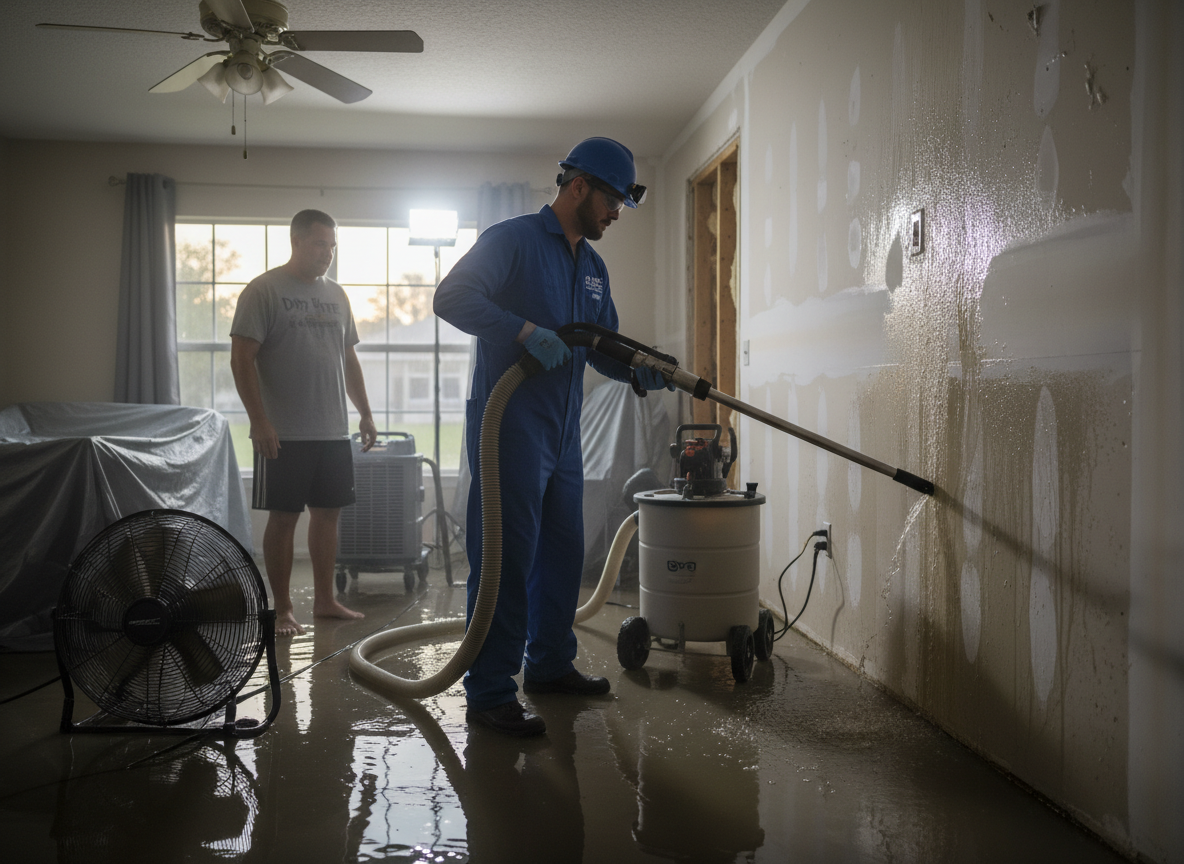
Port St. Lucie homes built from the 1980s onward commonly use wood framing with gypsum drywall that wicks moisture upward from baseboards during heavy summer rains or hurricane remnants. When water sits inside the cavity it reaches the paper facing and insulation within hours, creating conditions for mold in the county's high humidity. Extraction requires cutting strategic access points rather than full demolition so the structure can be dried before the next rain cycle hits.
Stucco exteriors common in neighborhoods like Tradition and along Gatlin Boulevard trap moisture against the sheathing when wind-driven rain enters through window seals or roof edges. Technicians must check both sides of the wall because water often travels laterally along the bottom plate and into adjacent rooms. Skipping this step leaves pockets that later cause blistering paint or warped baseboards weeks after the initial event.
Older sections near Fort Pierce with plaster-over-lath walls need different handling than standard drywall because the lath holds water against the studs. Infrared moisture meters locate the full extent without tearing open every surface. Once water is pulled, dehumidifiers sized for the square footage run until readings drop below 15 percent moisture content to meet local drying standards before new finishes are applied.
Technician insight
In Port St. Lucie the thing that catches most people out with Wall Water Extraction is how fast water travels laterally along the bottom plate during the June-to-October rainy season. Homes in Tradition and along the river often have concrete block with interior furring strips that hide moisture until it reaches the next room. Cutting only at the base and running the right dehumidifier size keeps the job contained instead of turning into full wall replacement.
Post-storm wall saturation in Sandpiper Bay
Heavy rain from a passing tropical system pushed water through a window seal in a 1990s home. Moisture had wicked three feet up the drywall and into the insulation. We mapped the full path, pulled water through base ports, removed wet insulation, and dried the cavity over two days before the owner reinstalled baseboards.
Wall Water Extraction Services We Offer
✓Drywall Cavity Water Extraction
Removes standing water from behind gypsum boards in Port St. Lucie homes using targeted ports and negative pressure to prevent mold growth in humid conditions.
✓Insulation Removal and Replacement
Extracts saturated fiberglass or cellulose from wall cavities after storms and installs new material once drying is complete in St. Lucie County residences.
✓Hidden Moisture Mapping
Uses meters and thermal imaging to trace water migration through walls in neighborhoods like Sandpiper Bay before extraction begins.
✓Baseboard and Trim Water Extraction
Pulls moisture from behind baseboards and door casings where water pools after roof leaks common during Port St. Lucie's rainy season.
✓Stucco Wall Cavity Drying
Addresses water trapped between stucco and sheathing in homes near the Turnpike after wind-driven rain events.
Wall Water Extraction Cost in Florida
| Service | Typical Range | What Affects It |
|---|---|---|
| Standard interior wall section extraction | $350–$650 | Moves with linear feet and number of cavities opened |
| Insulation removal add-on | $150–$300 | Per wall; higher when cellulose is involved |
| Stucco exterior wall access | $450–$850 | Requires exterior drilling and sealing |
| Post-storm multi-room job | $900–$1,800 | Common after hurricane remnants in St. Lucie County |
Ranges are typical for Florida and confirmed with an exact written quote before any work starts.
How it works
- 1
Initial Assessment
Technicians inspect affected walls in the Port St. Lucie home using moisture meters to map water spread without unnecessary demolition.
- 2
Access Creation
Small ports are cut at the base of walls to allow water removal while preserving as much drywall as possible.
- 3
Water Extraction
Specialized equipment pulls water from cavities and insulation in a single pass to reduce drying time before the next storm.
- 4
Drying And Monitoring
Air movers and dehumidifiers run until readings confirm the wall is dry enough for repairs.
Pricing
Cost depends on wall length, water volume, and whether insulation must be replaced.