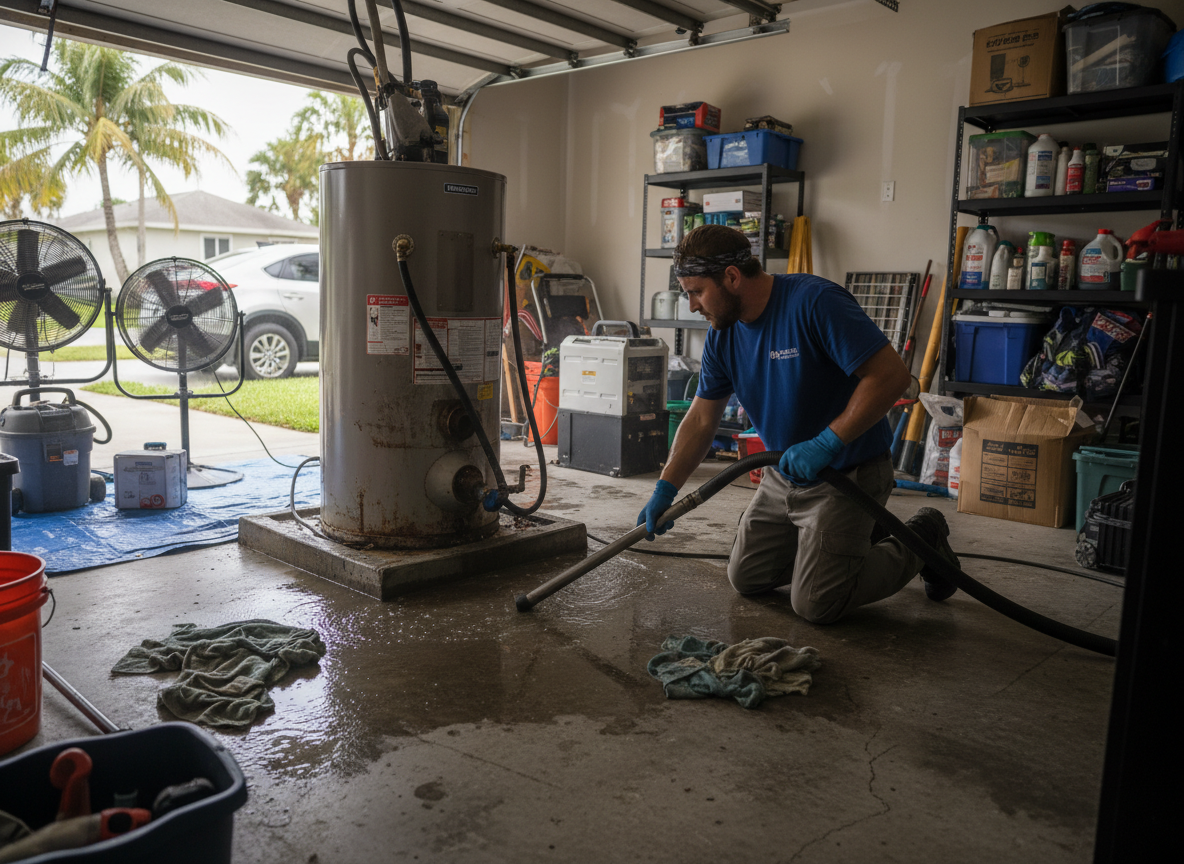
Water heater leaks in Port St. Lucie often start in utility rooms or attached garages of homes built from the 1980s through early 2000s. Slab-on-grade construction means water travels under tile or carpet before surfacing near exterior walls or in adjacent rooms. Extraction crews must pull baseboards and use moisture meters on the concrete because trapped moisture leads to mold within days during the humid summer months.
St. Lucie County properties near the Indian River or in neighborhoods like St. Lucie West and Tradition frequently see leaks worsen after heavy afternoon rains or tropical systems. Flat lots and shallow drainage mean extracted water has nowhere to go without proper pumping and dehumidification. Technicians route hoses to street drains or approved discharge points rather than letting water pool against foundations.
Older galvanized supply lines common in Port St. Lucie homes corrode at the water heater connections and create slow leaks that saturate drywall from the inside. Extraction includes cutting affected sections, removing wet insulation, and drying wall cavities with air movers placed at floor level. Homeowners who ignore the smell or slight discoloration often face larger repairs once the leak reaches electrical outlets or subflooring.
Emergency response focuses on isolating the water heater first, then mapping moisture migration paths unique to local floor plans. Crews document readings before and after drying so insurance adjusters have clear records of affected square footage in single-story ranch homes typical of the area.
Technician insight
In Port St. Lucie the thing that catches most people out with Water Heater Leak Extraction is how fast water moves under slab-on-grade floors in 1980s-2000s homes once it hits the flat lots near Tradition or St. Lucie West; homeowners often miss the moisture until it reaches the next room because the concrete never dries on its own during humid months.
Garage Heater Leak into Hallway
A water heater in a St. Lucie West garage developed a supply line leak that traveled under tile into the hallway. Extraction crews pumped standing water, removed baseboards, and ran drying equipment for three days until meter readings confirmed the slab was dry.
Water Heater Leak Extraction Services We Offer
✓Garage Water Heater Extraction
Rapid pump-out and drying of concrete floors when leaks from garage-installed units spread into living spaces in Port St. Lucie homes.
✓Slab Leak Water Removal
Moisture mapping and extraction under tile or carpet after water heater supply line failures common in St. Lucie County slab homes.
✓Utility Room Flood Cleanup
Targeted extraction and wall cavity drying when water heater leaks saturate drywall in interior utility rooms of older Port St. Lucie residences.
✓Post-Storm Water Heater Extraction
Removal of rainwater combined with heater leaks after tropical weather events that affect drainage around St. Lucie West and Tradition properties.
✓Baseboard and Subfloor Drying
Pulling trim and drying saturated subfloors after slow water heater leaks migrate across single-story homes in Port St. Lucie neighborhoods.
Water Heater Leak Extraction Cost in Florida
| Service | Typical Range | What Affects It |
|---|---|---|
| Small utility room extraction | $350–$650 | Depends on square footage and whether wall cavities require opening. |
| Garage slab drying | $450–$850 | Higher when water reaches living areas or carpet is involved. |
| Full-room subfloor drying | $600–$1,100 | Varies with home age and extent of moisture migration under tile. |
Ranges are typical for Florida and confirmed with an exact written quote before any work starts.
How it works
- 1
Isolate and Assess
Shut off water supply at the heater and meter moisture levels across floors and walls in the affected Port St. Lucie property.
- 2
Extract Standing Water
Pump visible water into approved discharge points and remove saturated carpet pads or rugs before they spread moisture further.
- 3
Dry Wall Cavities and Slab
Place air movers and dehumidifiers at floor level to pull moisture from concrete and behind baseboards typical of local construction.
- 4
Final Moisture Check
Re-measure readings and document dry conditions so homeowners can proceed with repairs or insurance claims.
Pricing
Upfront quotes after inspection; ranges reflect typical Port St. Lucie single-story homes.