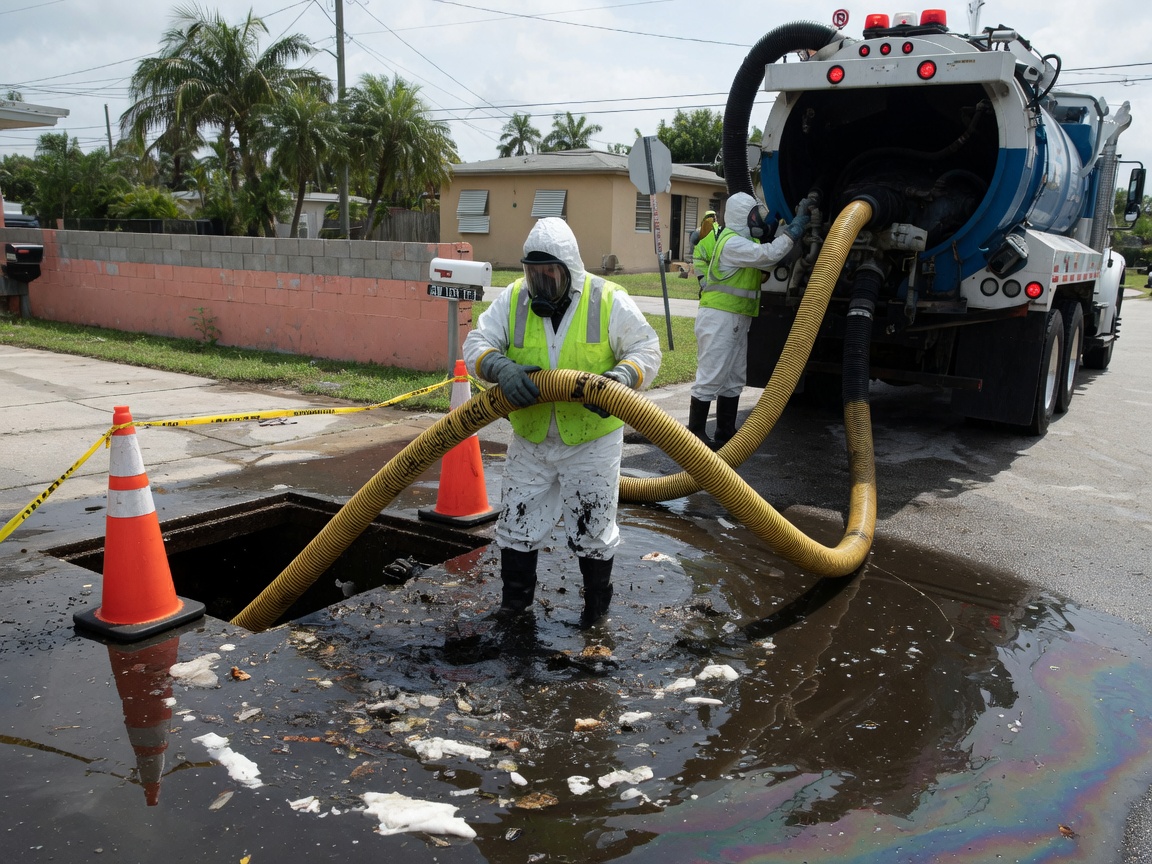
Older brick and wood-frame homes surrounding Central Park and Rollins College in Winter Park frequently experience sewage backups when aging lines crack under heavy summer downpours. Crews must maneuver equipment along narrow residential streets off US-17 and SR-426 while protecting the upscale character of the Park Avenue district and nearby Morse Museum grounds. The area's humid subtropical conditions allow rapid mold growth in crawl spaces once sewage enters, especially in properties built before modern drainage upgrades.
Sewage Water Extraction in Winter Park — What We Handle
- ✓Limited access on streets around Central Park requires smaller extraction units than in newer subdivisions.
- ✓Work near Rollins College and cultural venues demands quiet operation and flexible scheduling around events.
- ✓High water table in Orange County often mixes sewage with stormwater in pre-1970s neighborhoods.
Sewage Water Extraction Services We Offer in Winter Park
✓Toilet Overflow Extraction
Removes contaminated water from bathroom floors and subfloors after toilet backups common in older Port St. Lucie homes with narrow drain lines.
✓Septic Backup Removal
Extracts effluent that has surfaced from septic tanks or drain fields after heavy rain saturates the sandy soil around St. Lucie West properties.
✓Basement Sewage Cleanup
Handles below-grade water intrusion in homes near the St. Lucie River where high groundwater tables push sewage through foundation cracks.
✓Storm Drain Sewage Extraction
Clears street and yard flooding that carries sewage into garages and crawl spaces during summer thunderstorms in Port St. Lucie.
✓Commercial Sewage Water Removal
Extracts large-volume sewage from retail and office spaces after main line failures along major corridors like Gatlin Boulevard.
Sewage water extraction in Port St. Lucie often starts with older single-family homes built before 1990 in neighborhoods like St. Lucie West or along the St. Lucie River, where aging septic systems and flat terrain allow contaminated water to spread quickly under slabs during heavy summer rains. Technicians must first isolate the affected zones because the region's high water table can push effluent back into living spaces even after the initial source is stopped. Proper PPE and negative air machines are required from the first step to protect against bacteria common in Florida's humid climate.
Edge cases include post-hurricane tidal surges that mix sewage with saltwater near the riverfront sections of Port St. Lucie, which corrodes flooring adhesives and forces removal of subfloors that would otherwise be salvageable. Code requirements in St. Lucie County mandate documentation of moisture levels below 15 percent before any reconstruction can begin, and skipping this step risks mold growth that spreads fast in the area's consistent 70-plus percent humidity. Crews carry portable generators because power outages during storm season frequently disable sump pumps and septic aerators.
How It Works in Winter Park
- 1
Site Assessment
Technicians inspect the source, test for hidden moisture in walls and under slabs, and map affected zones specific to Port St. Lucie soil conditions.
- 2
Containment Setup
Plastic barriers and negative air machines isolate the area to prevent cross-contamination through shared HVAC systems found in local homes.
- 3
Water Extraction
Truck-mounted and portable vacuums remove standing sewage while monitoring for re-entry from the high local water table.
- 4
Sanitation and Drying
Antimicrobial application followed by industrial dehumidifiers and air movers brings moisture levels down to county code standards.
Serving All of Winter Park
We regularly handle sewage water extraction jobs near:
- 📍Park Avenue
- 📍Rollins College
- 📍Morse Museum
- 📍Central Park
Sewage Water Extraction Pricing in Winter Park
Pricing varies by volume, access difficulty, and whether hidden moisture under slabs or in walls requires additional equipment.
Want the full picture of this service? See our Sewage Water Extraction page, or everything we do in Winter Park, FL.