2026-10-05 ·
How Quickly Should Standing Water Be Removed From a Florida Home?
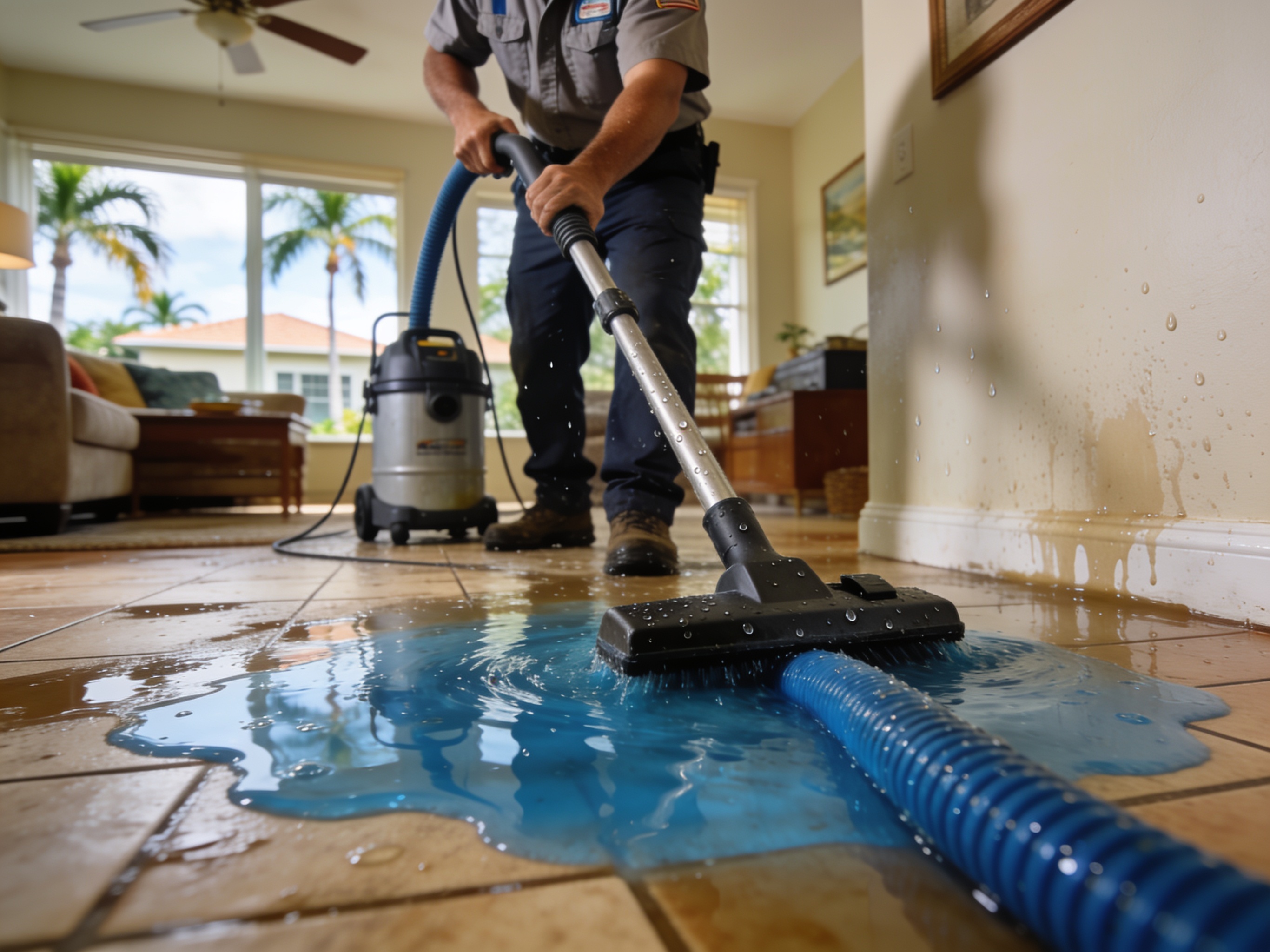
Standing water should be removed from a Florida home within 24-48 hours. In Port St. Lucie, high humidity and frequent summer rains accelerate mold growth on drywall and subfloors once water sits beyond that window, especially in slab-on-grade homes common throughout St. Lucie County.
Why the 24-48 Hour Window Matters in Port St. Lucie
Florida's climate keeps indoor moisture levels elevated year-round, but the rainy season from June through October brings repeated downpours that can leave inches of standing water after roof leaks or appliance failures. Homes built before 1990 in neighborhoods like White City and River Park often have older plywood subfloors and limited vapor barriers, allowing water to wick upward within hours. Once saturation reaches 48 hours, mold colonies form on paper-faced drywall and carpet padding, requiring full removal rather than simple drying. Emergency water extraction performed inside the first day limits secondary damage to framing and cabinets. Delaying past 72 hours in St. Lucie County's sandy soil areas also increases the chance of hidden moisture under tile, leading to long-term odor issues that homeowners notice weeks later.
How Local Weather and Terrain Change Extraction Speed
Port St. Lucie sits in a flat coastal plain where even moderate storms can produce 4-6 inches of rain in a single afternoon, overwhelming gutters on ranch-style homes. The combination of high groundwater and clay pockets in certain subdivisions slows natural drainage, so water that enters through a sliding door stays pooled longer than in inland counties. During hurricane season, power outages disable sump pumps in crawl spaces common along the North Fork of the St. Lucie River, turning minor seepage into standing water that must be pumped within hours. Water removal crews working these jobs note that slab homes in the Tradition community dry faster once extracted because of better grading, while older concrete-block houses in Port St. Lucie West retain moisture in block cells for days. Acting inside 24 hours keeps restoration costs lower because less material needs replacement.
Practical Steps Homeowners Can Take Right Away
Shut off the water source if a burst pipe or leaking water heater is involved, then move furniture and belongings out of the affected rooms before moisture spreads. Document the water depth and affected square footage with photos for insurance purposes. Contact a local team offering standing water removal that can arrive with truck-mounted extractors capable of pulling 50-100 gallons per minute from carpet and pad. Avoid using household fans alone, as they simply circulate humid air; professional dehumidifiers rated for 70-100 pints per day are needed to drop moisture content below 15 percent in wood framing. In Port St. Lucie, where afternoon storms can return the same day, temporary tarping of roof breaches prevents additional water entry while extraction proceeds.
When to Call for Professional Extraction Services
If water depth exceeds one inch across more than 100 square feet, or if the source is unknown and possibly contaminated, homeowners should not attempt removal themselves. Residential water extraction teams in the area carry moisture meters that detect hidden saturation behind baseboards and under vinyl plank flooring common in newer Port St. Lucie builds. For detailed cost ranges tied to square footage and drying time, see How Much Does Water Extraction Cost in Florida?. Waiting beyond 48 hours often turns a straightforward pump-out into full wall and floor demolition, especially after toilet overflows or appliance leaks that introduce bacteria into the water.
Long-Term Effects of Delayed Removal on Local Homes
Homes in St. Lucie County that experience standing water left for three or more days frequently develop hidden mold behind kitchen cabinets and in HVAC returns, requiring remediation that can exceed the original extraction cost. The area's consistent 70-90 percent relative humidity means any remaining moisture evaporates slowly, allowing spores to colonize within wall cavities. Owners in areas like Lake Charles and Savanna Club report recurring musty smells months after minor floods when extraction was postponed. Prompt emergency water extraction followed by targeted drying prevents these outcomes and keeps repairs limited to affected surfaces rather than entire rooms.