2026-10-05 ·
Water Damage Restoration in Florida: What Homeowners Should Do First
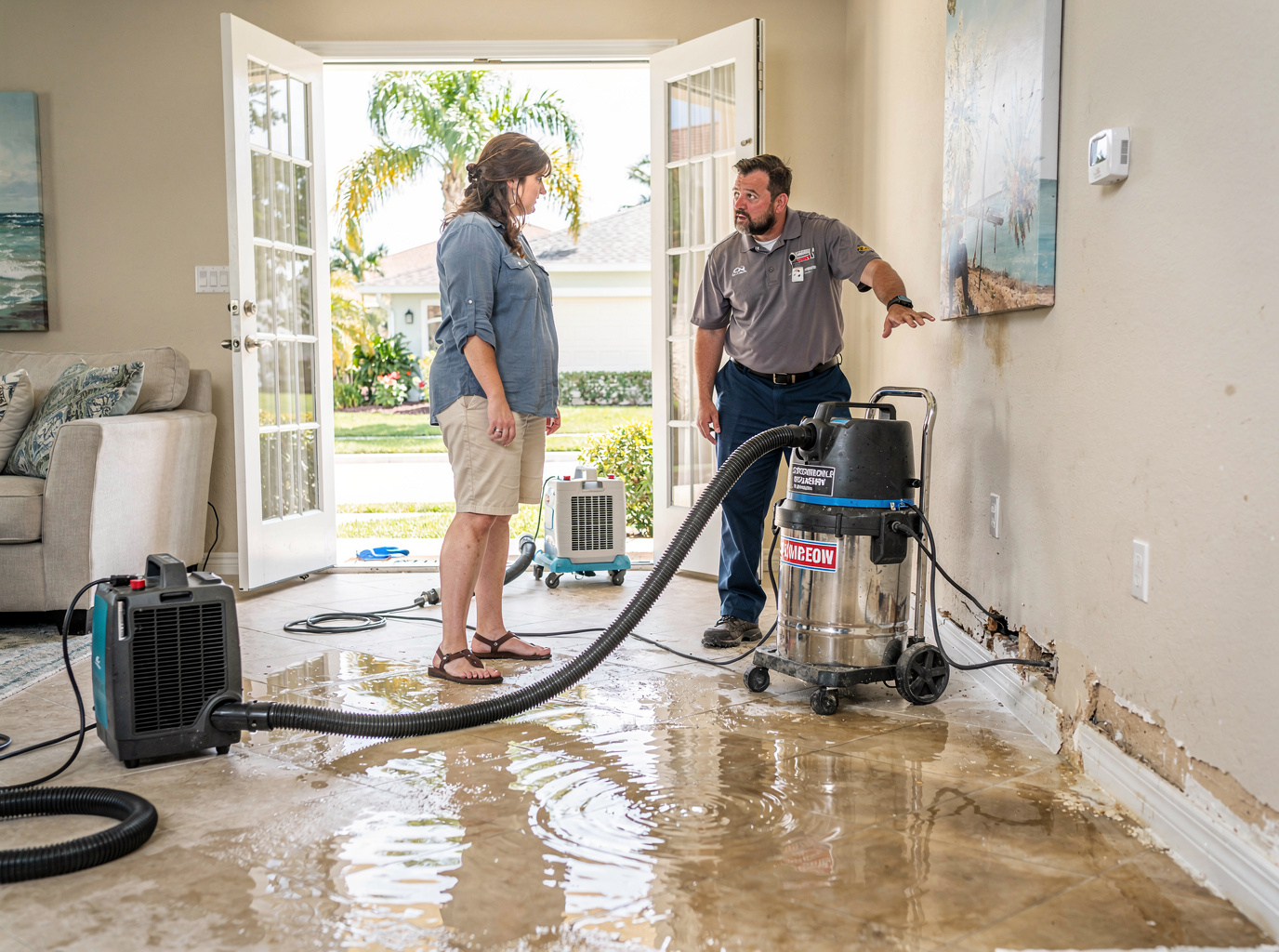
The first action is to stop the water source if it can be done safely, move irreplaceable items out of the affected rooms, and contact a local team for Emergency Water Extraction before moisture spreads into walls or subfloors.
Assess Immediate Safety Risks
Port St. Lucie homes built on concrete slabs from the 1980s onward often route supply lines under the slab, so leaks can push water across large floor areas quickly. Standing water near outlets or HVAC returns creates shock hazards within minutes. Homeowners should cut power to the affected zone at the breaker panel rather than unplugging devices while wet. Flat sandy soils in neighborhoods like Hidden Oaks and along the St. Lucie River allow water to pool rather than drain, raising the risk of hidden saturation under baseboards. Checking for sewage odor or discoloration helps decide whether the water qualifies as clean or contaminated before any cleanup begins.
Stop the Source and Document Conditions
Locate the shutoff valve for the leaking fixture or main line and turn it clockwise until snug. In many Port St. Lucie ranch-style homes the main valve sits near the water heater closet or at the street meter box. Once flow stops, photograph the water line, affected flooring, and any furniture that must be moved, noting the time and date on each image. These records support insurance claims later. Avoid walking through deeper water that could carry debris into carpet padding or subfloor seams. If the leak stems from a burst pipe or failed appliance, note the model and age so technicians can advise on related risks during the extraction visit.
Protect Belongings and Limit Spread
Lift area rugs, books, and electronics to higher ground or an unaffected room while wearing rubber boots. In Port St. Lucie’s humid climate, fabric and drywall absorb moisture fast once relative humidity climbs above 60 percent, which happens routinely after summer storms. Block doorways with towels or plastic sheeting to keep water from migrating into hallways or closets. Do not attempt to vacuum or mop large volumes yourself; improper removal can drive water deeper into the slab or behind baseboards. Instead, open windows only if outdoor humidity is lower than indoor levels, which is rare during the June-to-November rainy season.
Arrange Professional Emergency Water Extraction
Call for Emergency Water Extraction as soon as the source is controlled. Technicians arrive with extraction wands and moisture meters sized for the slab-on-grade construction common throughout St. Lucie County. They can reach hidden moisture behind walls or under tile that DIY fans miss. Homeowners who also face appliance failures may want to review What To Do When an Appliance Causes Water Damage for model-specific tips. Those dealing with supply-line failures can read What To Do After a Pipe Bursts in Your Florida Home for valve locations typical in local builds. For residents in Port St. Lucie, same-day response keeps mold from starting within 24–48 hours in the warm, moist air.