2026-10-05 ·
What To Do After a Pipe Bursts in Your Florida Home
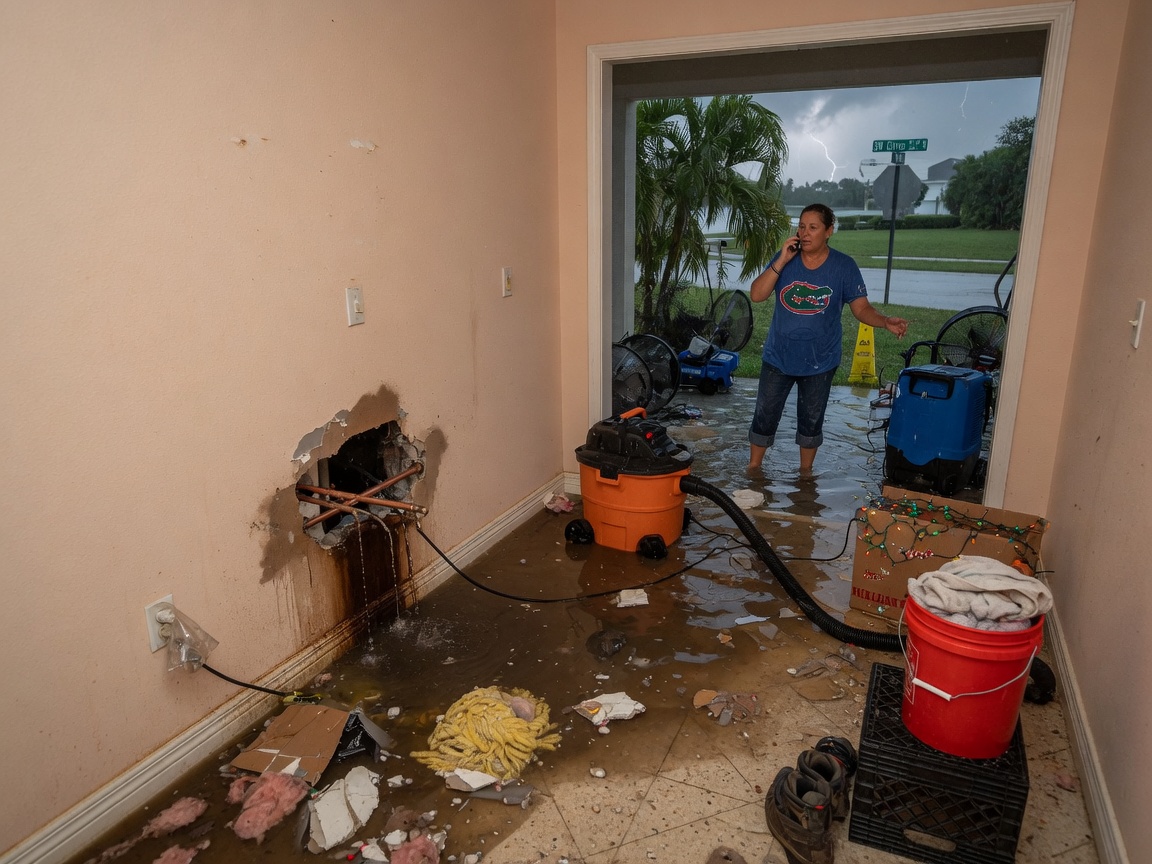
Shut off the main water valve right away, then call for Emergency Water Extraction to limit saturation in your Port St. Lucie home. In older neighborhoods like those near Tradition or along the St. Lucie River, copper and galvanized lines from the 1980s and 1990s often fail at joints, sending water into slab foundations and wall cavities within minutes. Florida's high water table and frequent afternoon storms during the June-to-October rainy season make standing water spread quickly across flat lots, so every hour counts before drywall and flooring begin to wick moisture upward.
Shut Off the Water and Stop the Flow
Locate the main shutoff valve near the water meter or where the line enters the house and turn it clockwise until tight. In Port St. Lucie homes built before 2000, these valves can stick, so keep a spray of penetrating oil handy for the next time. Once water stops, open faucets on lower levels to drain remaining pressure from the lines. This step alone can cut the volume of water that reaches carpets and subfloors by more than half, especially in single-story ranch homes common across the city.
Remove Standing Water Before It Spreads
Use a wet vac or buckets to pull visible water from hard surfaces first, then move furniture and lift area rugs. Port St. Lucie’s sandy soil drains slowly in low-lying yards, so water that reaches the exterior can back up against the foundation during the next rain. Standing Water Removal crews bring truck-mounted pumps that handle the volumes typical after a burst supply line. Homeowners who wait more than a few hours often see moisture travel under baseboards into adjacent rooms, turning a one-room event into whole-house work.
Call for Professional Burst Pipe Extraction
Contact a local team experienced with Burst Pipe Water Extraction to pull water from under flooring and behind walls before mold sets in. In Port St. Lucie’s humid climate, drywall can stay damp for days even after surface water disappears, allowing spores to grow within 48 hours. Technicians use moisture meters to map hidden saturation in slab homes and place air movers that account for the region’s typical 70-80 percent relative humidity. This targeted approach keeps repairs smaller than waiting for visible signs of damage.
Dry the Structure and Watch for Mold
After extraction, run dehumidifiers set to 45-50 percent until readings on a moisture meter drop below 15 percent on wood and below 1 percent on concrete. Port St. Lucie summers keep outdoor air moist, so closed-up homes without mechanical drying can re-absorb humidity overnight. Check behind toilets and under kitchen sinks where pipes often run, since these spots trap moisture against particleboard cabinets. How Quickly Should Standing Water Be Removed From a Florida Home? explains the timeline that prevents secondary issues common in the area.
Plan Repairs and Future Prevention
Once the space is dry, replace any swollen subfloor or insulation that absorbed water. Many Port St. Lucie homes have PEX or copper lines that can be rerouted away from exterior walls to reduce freeze or corrosion risk during rare cold snaps. Review the full cost picture in How Much Does Water Damage Restoration Cost in Florida? before choosing materials that hold up better in the local environment. Regular checks of shutoff valves and flexible supply lines under sinks catch small leaks before they become extraction jobs.