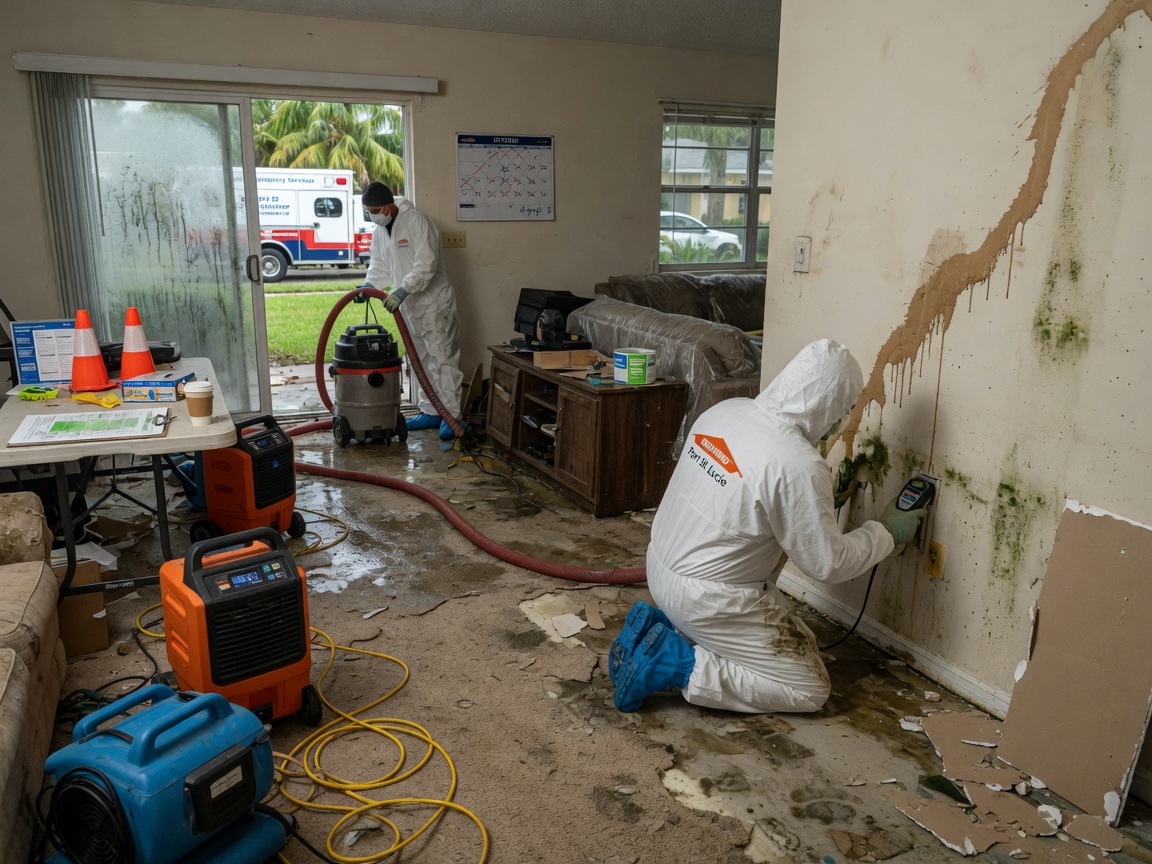
Jacksonville's size and riverfront location create frequent water emergencies after heavy rains or storms. Florida Water Rescue crews travel from Port St. Lucie to handle extraction in neighborhoods like Riverside and San Marco where older homes sit close to the St. Johns River.
Major routes including I-95 and I-10 let teams reach Downtown Jacksonville, Arlington, and Mandarin quickly. Work often focuses on multi-story properties and commercial buildings around the port and military sites where water can spread through basements and ground floors.
Hot humid summers increase mold risks after any flooding, so crews prioritize complete water removal on the first visit to protect wood-frame houses common in Avondale and Springfield.
Emergency Water Extraction Services in Jacksonville, FL
Flood Water Extraction in Jacksonville
Jacksonville's vast Duval County footprint spreads emergency water extraction crews across miles of St. Johns River shor…
Details →Basement Water Extraction in Jacksonville
Jacksonville homes near the St. Johns River in Duval County often see basement water from tidal surges and summer thunde…
Details →Sewage Water Extraction in Jacksonville
Sewage water extraction in Jacksonville often involves properties spread across its vast Duval County footprint, where h…
Details →Storm Water Extraction in Jacksonville
Jacksonville's vast footprint in Duval County means storm water extraction crews routinely handle saturation in large-lo…
Details →Burst Pipe Water Extraction in Jacksonville
Jacksonville's spread-out housing stock, from Riverside bungalows to military-adjacent subdivisions near the St. Johns R…
Details →Around Jacksonville
We regularly work near:
- 📍Jacksonville Landing
- 📍Cummer Museum
- 📍St. Johns River
- 📍EverBank Field
- 📍Kingsley Plantation
Emergency Water Extraction in Jacksonville — Local Notes
- •Many Riverside and Avondale homes built before 1950 have crawl spaces and plaster walls that trap water after river or street flooding.
- •St. Johns River overflow combined with Duval County's flat terrain means extraction crews often work on large lots with limited side access.
- •Military housing clusters near the port require coordinated entry and rapid drying to avoid disrupting base operations.
- •Summer humidity accelerates secondary damage, so teams stage equipment on-site using I-10 and US-1 corridors for same-day response from Port St. Lucie.